
“You are not your thoughts; thoughts are just thoughts. They do not have power—you give power to them.”
This simple sentence carries a life-changing truth. Most people live as if every thought in their mind is a fact, a command, or a reflection of who they truly are. But what if that belief itself is the problem? What if freedom begins the moment you realize that thoughts are not you—and never were?
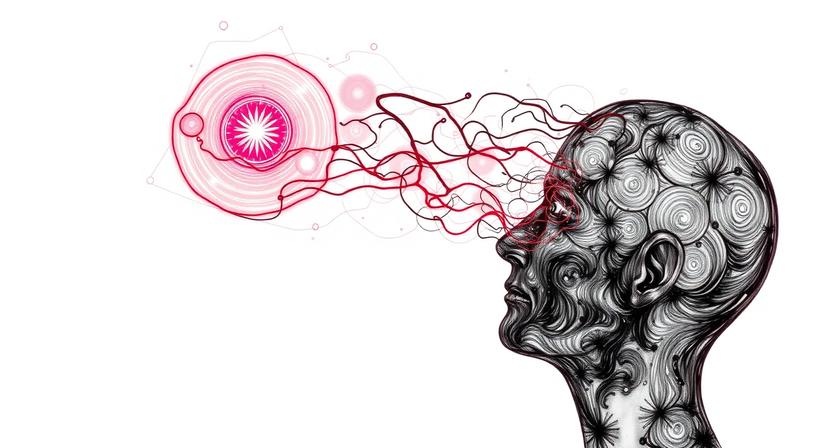
In this blog, we will explore what thoughts really are, why they feel so powerful, and how learning to observe them rather than obey them can transform your mental health, confidence, and overall quality of life.
Understanding the Nature of Thoughts
Thoughts are mental events. That’s it.
They arise automatically, often without your permission, and disappear just as quickly. A thought can be logical or illogical, helpful or harmful, true or completely false. Yet we tend to treat all thoughts as equally important and equally real.
You don’t decide to think every thought you think. If you did, you would never choose self-doubt, fear, or negativity. Thoughts simply appear—conditioned by past experiences, habits, environment, emotions, and even what you ate or watched recently.
The key realization is this: having a thought does not mean it represents reality.
Why We Believe Our Thoughts So Easily
If thoughts are just thoughts, why do they feel so powerful?
The answer lies in identification. From childhood, we are rarely taught to question our inner dialogue. When a thought says, “I’m not good enough,” we assume it must be true—because it came from inside us.
Over time, we start believing:
- If I think it, it must be real
- If I feel it, it must define me
- If my mind says it, I should listen
This creates a loop where thoughts trigger emotions, emotions reinforce thoughts, and the cycle repeats. The power doesn’t come from the thought itself—it comes from your belief in it.
You Are the Observer, Not the Thought
Here’s a powerful question to ask yourself:
If you can notice a thought, can you truly be that thought?
The very act of observing a thought proves that there is a part of you separate from it. That part—the awareness behind the thought—is who you really are.
Think of your mind like a screen and your thoughts like images playing on it. The screen doesn’t change when the images change. Similarly, you remain the same awareness whether your thoughts are positive, negative, or neutral.
Once you understand this, thoughts lose their authority.
How Thoughts Gain Power Over Your Life
Thoughts only influence your life when you:
- Believe them without questioning
- Repeat them mentally
- Act on them automatically
For example:
- A thought says, “I will fail.”
- You believe it.
- Fear arises.
- You avoid action.
- The outcome reinforces the original thought.
This creates the illusion that the thought was “right,” when in reality, belief gave it power.
Without belief, a thought is just noise.
The Difference Between Thoughts and Reality
Thoughts talk about reality—but they are not reality itself.
Reality is what is happening right now:
- Your breath
- Your body
- The room around you
- This moment
Thoughts, on the other hand, are usually about:
- The past
- The future
- Imaginary scenarios
- Assumptions and interpretations
When you confuse thoughts with reality, anxiety and stress increase. When you separate them, calm naturally arises.
How to Stop Giving Thoughts Unnecessary Power
You don’t need to stop thinking—that’s impossible. What you need is a new relationship with your thoughts.
Start by noticing them rather than engaging with them. Say silently, “I’m having the thought that…” This small shift creates distance and reduces emotional intensity.
Then question the thought:
Is it 100% true?
Is it helpful?
Would you say it to someone you love?
Most negative thoughts collapse under simple questioning.
Finally, allow thoughts to pass. Thoughts are temporary by nature. When you don’t fight or feed them, they fade on their own—like clouds moving across the sky.
Why Fighting Thoughts Makes Them Stronger
One of the biggest mistakes people make is trying to “get rid of” thoughts. Resistance creates tension, and tension keeps the mind stuck.
When you fight a thought, you are still giving it attention—and attention is energy.
Acceptance doesn’t mean agreement. It simply means allowing the thought to exist without engaging with it.
Paradoxically, what you allow loses power; what you resist persists.
The Role of Mindfulness in Thought Freedom
Mindfulness is the practice of being present without judgment. It trains you to observe thoughts as passing events rather than commands.
With regular mindfulness:
- Thoughts become quieter
- Emotional reactions soften
- You respond instead of reacting
You begin to live from awareness rather than mental noise.
You Are More Than Your Mind
Your mind is a tool—not your identity.
You are:
- The awareness behind your thoughts
- The space in which emotions arise
- The presence that remains unchanged
When you stop defining yourself by your thinking patterns, you reclaim your inner freedom. You no longer need perfect thoughts to feel at peace.
Peace comes from not needing thoughts to be different.
How This Realization Changes Everyday Life
When you stop identifying with thoughts:
- Fear no longer controls decisions
- Self-doubt loses credibility
- You act with clarity, not compulsion
- Emotional resilience increases
Life becomes lighter—not because problems disappear, but because your relationship with them changes.
Final Thoughts: You Choose What Has Power
Thoughts are automatic. Belief is optional.
The moment you realize that you are not your thoughts, you stop being a prisoner of your mind. You don’t need to control every thought—you only need to stop giving them authority over your life.
Remember:
Thoughts don’t have power. You give power to them.
And once you stop giving them power, you discover something extraordinary—
Freedom was always there.